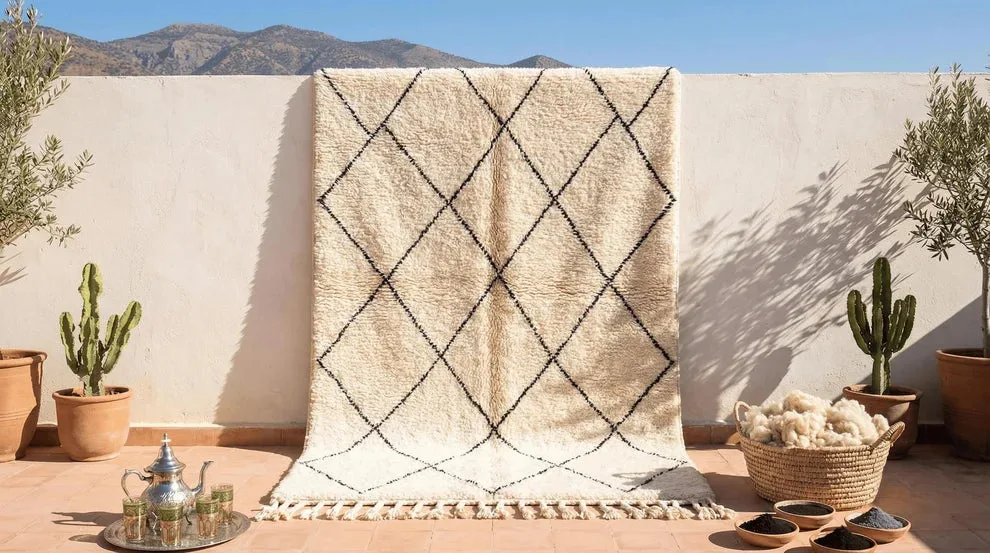
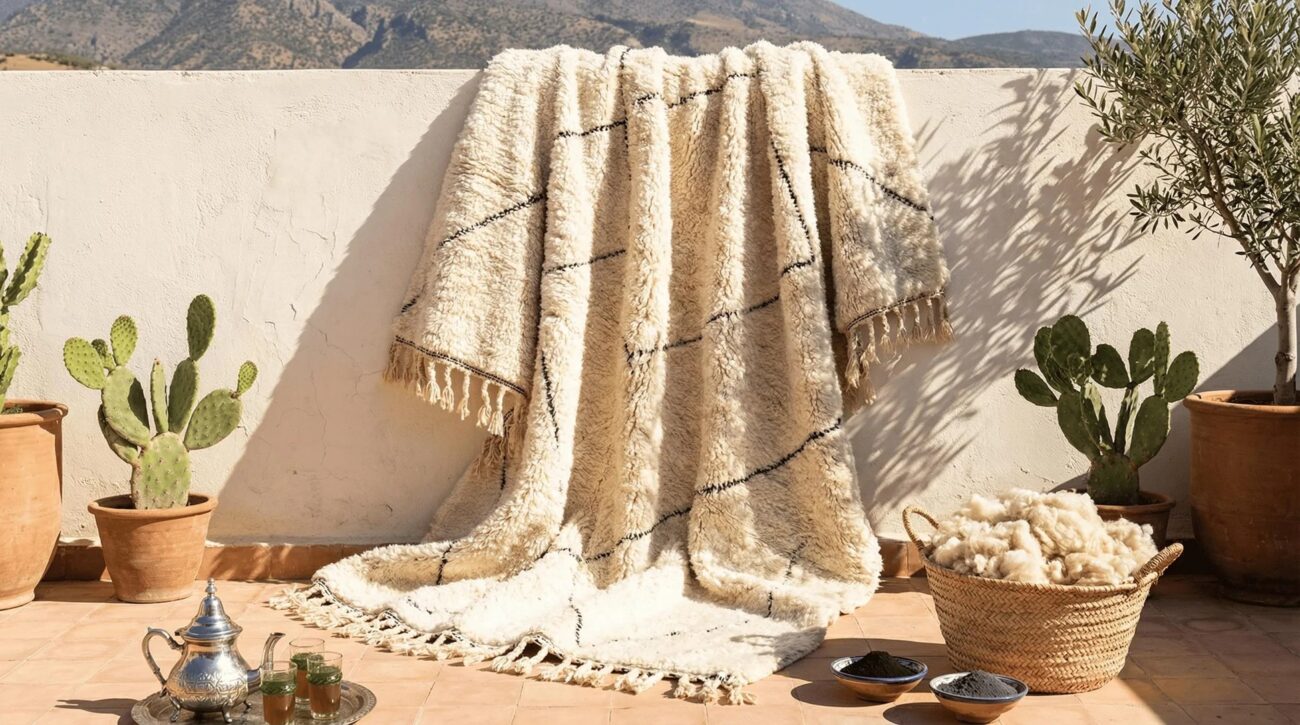
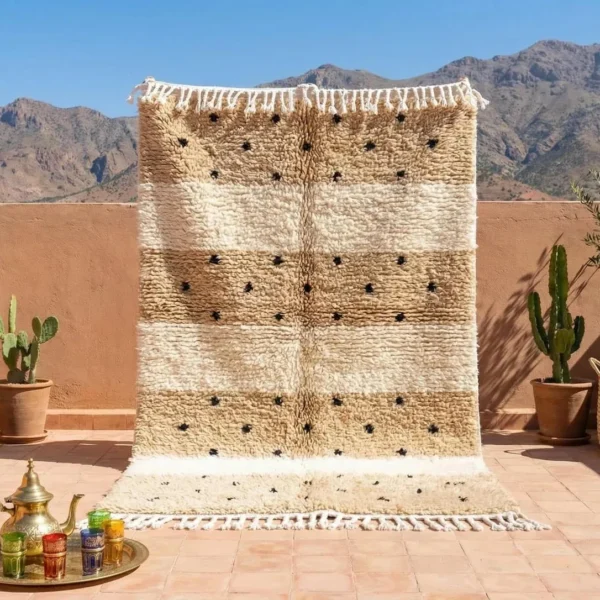
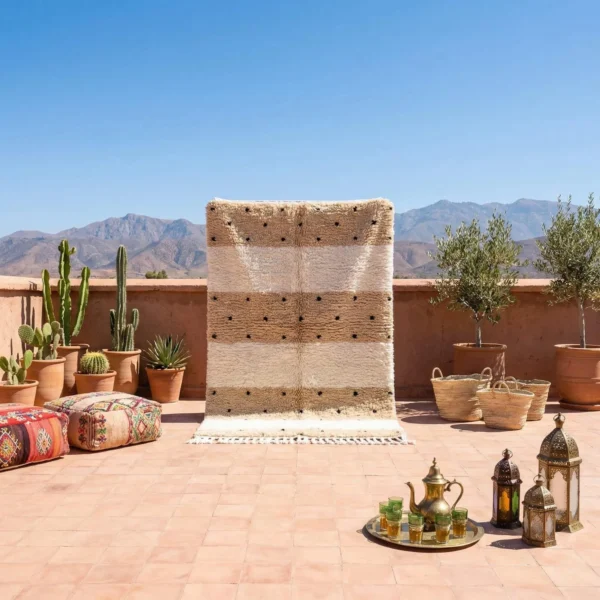
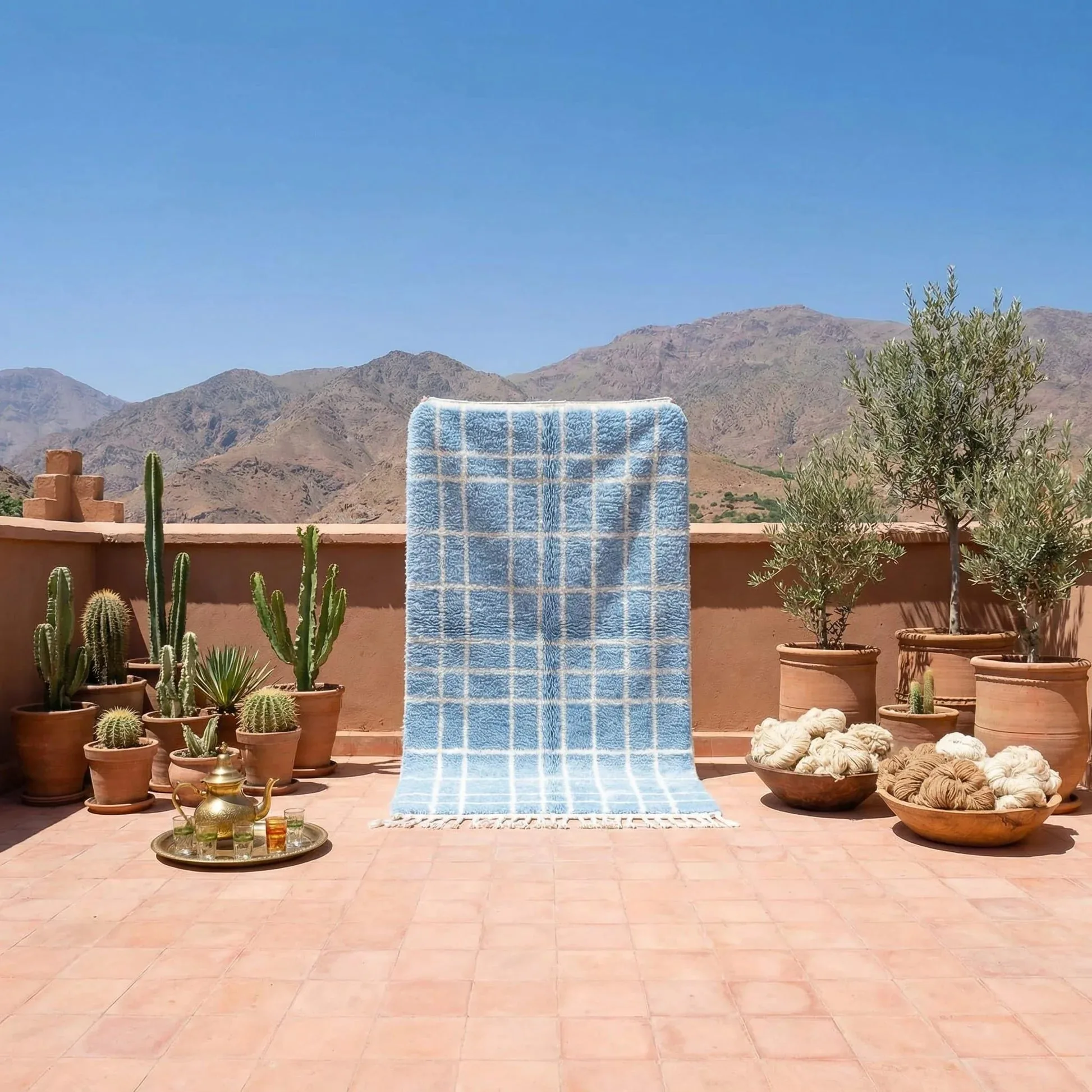
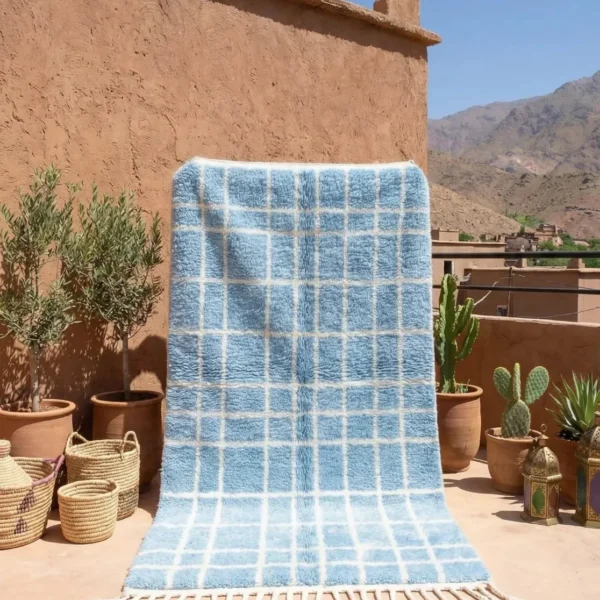
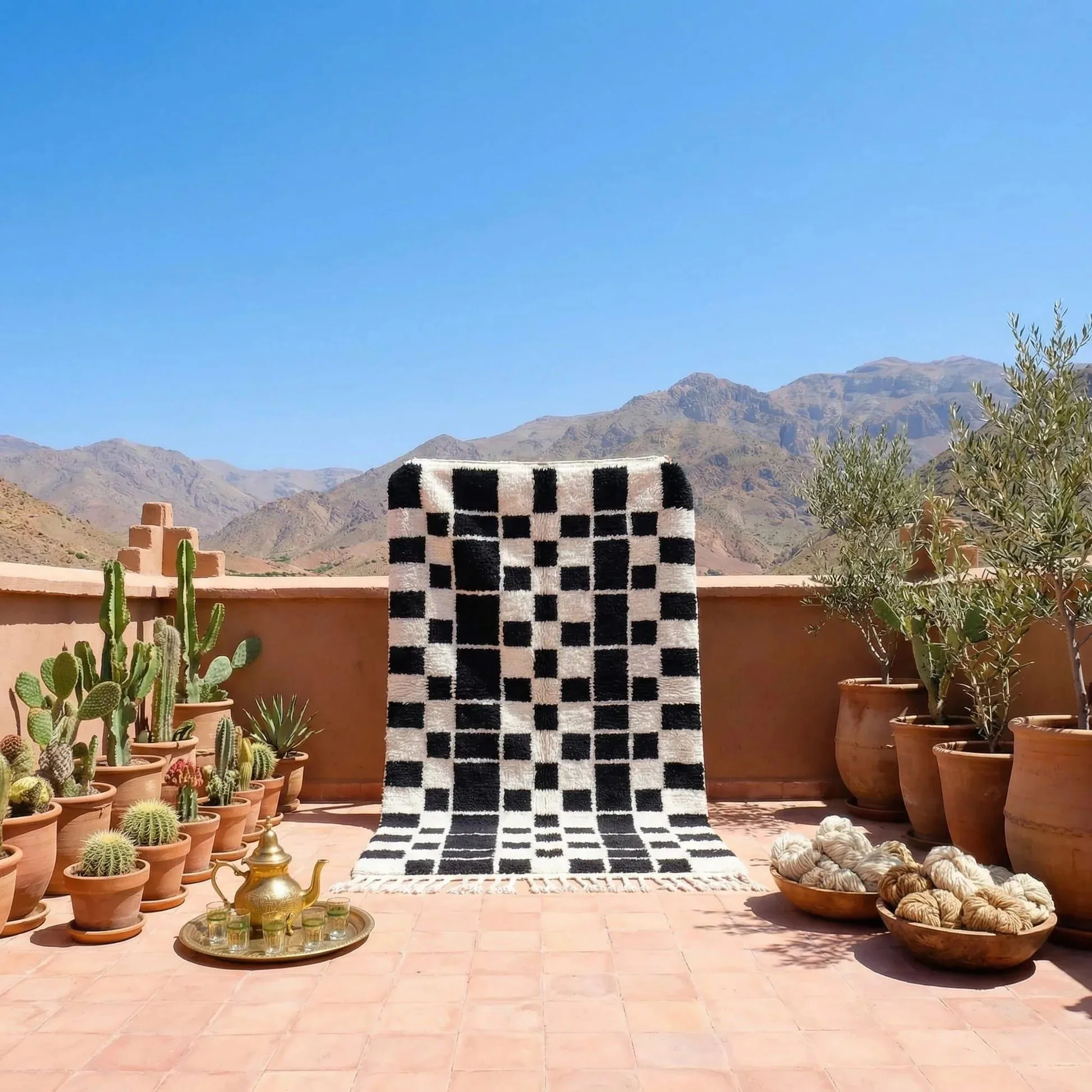
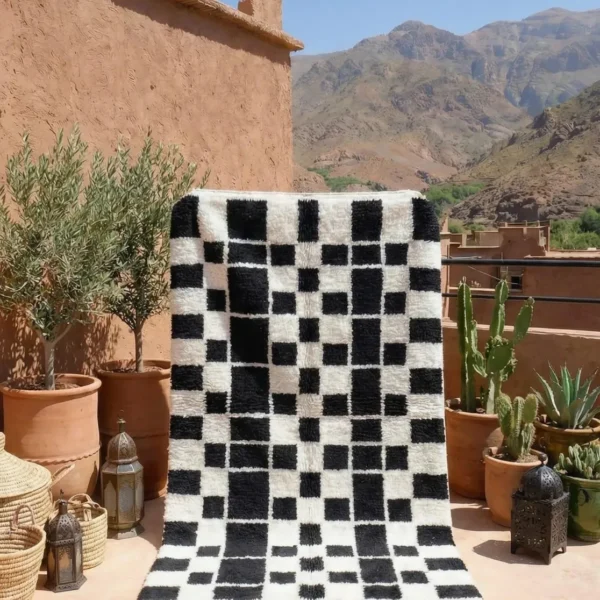
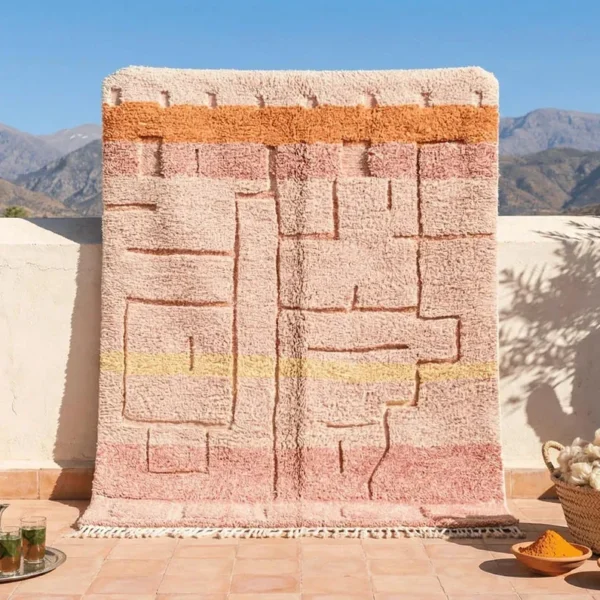
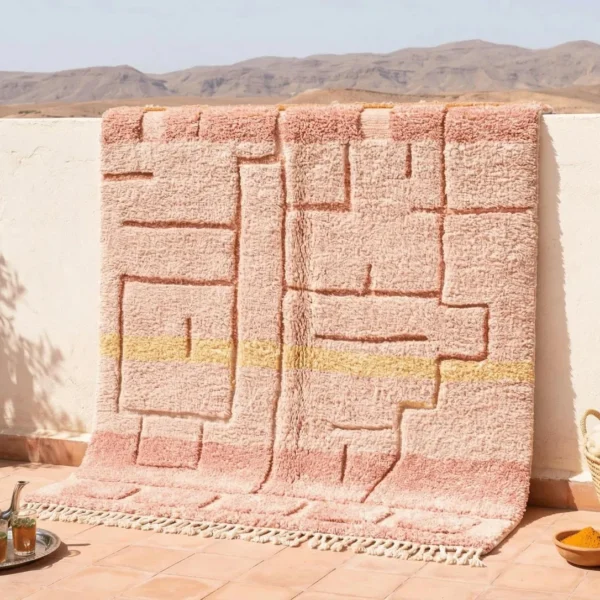
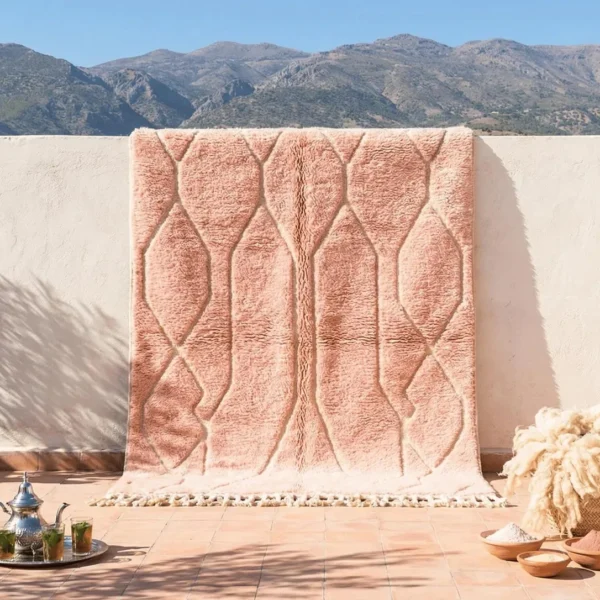
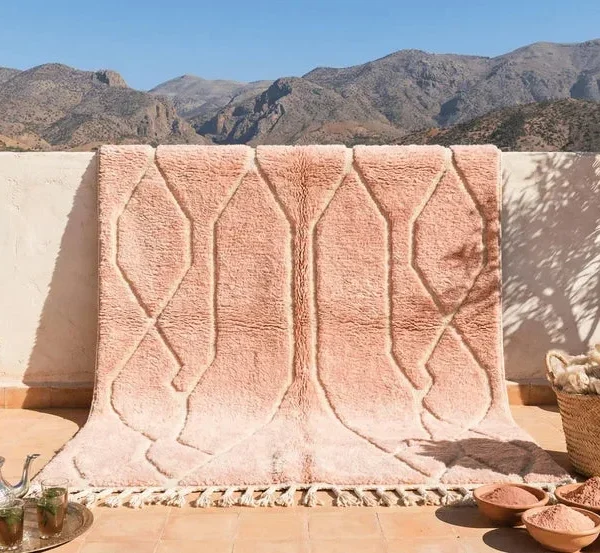
Moroccan rug vs Persian rug: a Moroccan rug is a thick, soft wool rug woven by Amazigh (Berber) women in Morocco, with simple geometric designs that suit modern, minimalist rooms. A Persian rug comes from Iran, has a shorter, denser pile and intricate floral or medallion designs, and suits traditional and formal rooms. Turkish rugs sit in between: geometric like Moroccan rugs, but usually lower-pile and more colourful. None is “better”; they are different traditions for different rooms.
Moroccan vs Persian vs Turkish Rugs at a Glance
| Moroccan rug | Persian rug | Turkish rug | |
|---|---|---|---|
| Origin | Atlas Mountains and plains of Morocco | Iran | Turkey (Anatolia) |
| Made by | Mostly Amazigh women, at home or in cooperatives | Village, tribal and city workshops | Village and workshop weavers |
| Pile | Thick and soft, often medium to high | Short and dense | Low to medium; many flatweaves (kilims) |
| Design | Abstract, geometric, often asymmetric | Curving florals, vines and central medallions | Bold geometric motifs and borders |
| Colours | Ivory and black, or bright reds, pinks and blues | Deep reds, navy, ivory, gold | Reds, blues, madder and earthy tones |
| Best for | Modern, Scandinavian, boho and minimalist rooms | Traditional and formal rooms | Eclectic and rustic rooms |
How Each Rug Is Made
All three traditions include hand-knotted rugs, where wool is tied around vertical warp threads and cut to form the pile. The difference is in the knot and its density. Persian rugs are often woven with very small, tightly packed knots, which allows fine, curving detail but takes enormous time, so fine Persian rugs are expensive. Turkish rugs traditionally use the symmetrical Turkish (Ghiordes) knot, which is strong and gives an even pile. Moroccan rugs use fewer, longer knots and thick hand-spun wool, which is why they feel so plush and why their designs are bold and geometric rather than finely detailed.
Moroccan rugs were also traditionally made by women for their own homes rather than for trade. That is why they look freer and more personal, with irregular lines and symbols that carry meaning for the weaver. Our guide to Moroccan rug symbols explains what those motifs mean.
Feel and Comfort
If softness underfoot is your priority, a Moroccan rug wins easily. A Beni Ourain rug feels like a thick wool blanket on the floor, which makes it a favourite for bedrooms and living rooms. Persian rugs feel firmer and flatter, which suits dining rooms and hallways where chairs and heavy traffic move across them. Turkish kilims are thin and light, easy to move and good for layering.
Style: Which Fits Your Room?
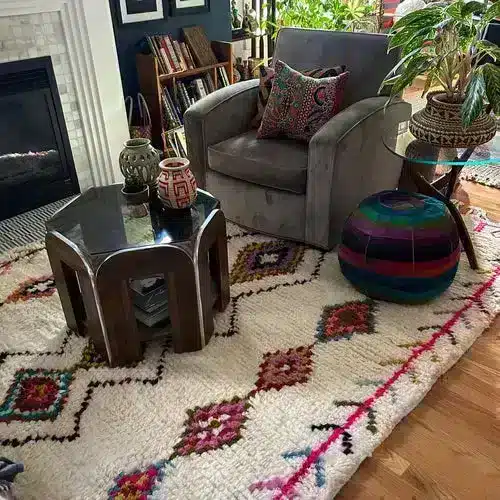
- Choose a Moroccan rug for modern, Scandinavian, Japandi, boho or minimalist interiors, or when you want a neutral rug that still has texture. For colour, look at Azilal and Boujaad rugs.
- Choose a Persian rug for classic, traditional or formal rooms with dark wood furniture.
- Choose a Turkish rug for eclectic, rustic or Mediterranean rooms, or a flatweave for a lighter look.
You can also combine them: a neutral Moroccan rug layered under a smaller vintage-style rug is a popular look. See our tips on layering Moroccan rugs.
Durability and Care
A well-made rug from any of these traditions can last for decades. Dense Persian rugs are very hard-wearing in high-traffic areas. Thick Moroccan wool rugs hide dirt well and bounce back after being walked on, but their deeper pile needs regular vacuuming without a beater bar. Flatweaves are the easiest to shake out and clean. Our guide on how to clean a Moroccan rug covers the basics.
Price: Moroccan vs Persian Rugs
Fine hand-knotted Persian rugs are usually the most expensive of the three, because their dense knotting takes so long. Moroccan rugs are generally more affordable for the same size, especially if you buy directly from the weavers. Our hand-knotted wool rugs start at around $535 for an 8×10 and $789 for a 9×12, with free worldwide shipping. We explain what drives the price in why are Moroccan rugs so expensive.
So, Which Should You Buy?
If you want a soft, modern rug with handmade character, choose a Moroccan rug. If you want formal elegance and fine detail, choose a Persian rug. If you want bold geometric colour in a lighter weight, choose a Turkish rug. Whatever you pick, make sure it is genuinely hand-knotted from wool.
Every rug in our Moroccan rug shop is hand-knotted to order by the women of our Atlas Mountains cooperative, in any size you need.
Frequently Asked Questions
Is a Moroccan rug a Persian rug?
No. Persian rugs are made in Iran; Moroccan rugs are made in Morocco by Amazigh (Berber) weavers. Both are hand-knotted wool rugs, but they come from separate traditions with different designs, knots and pile.
Are Moroccan rugs better than Persian rugs?
Neither is better overall. Moroccan rugs are softer, thicker and more modern-looking; Persian rugs are denser, more detailed and more traditional. Choose by the feel and style you want.
What is the difference between Moroccan and Turkish rugs?
Both use geometric designs, but Moroccan rugs usually have a thicker, softer pile and freer, more abstract patterns, while Turkish rugs tend to be lower-pile, more symmetrical and more colourful, with many flatwoven kilims.
Is a Berber rug the same as a Moroccan rug?
Usually, yes. “Berber rug” refers to rugs woven by Amazigh (Berber) people, most of which come from Morocco. In the carpet trade, “Berber” can also mean a machine-made looped carpet, so check what you are buying. See what is a Berber rug.