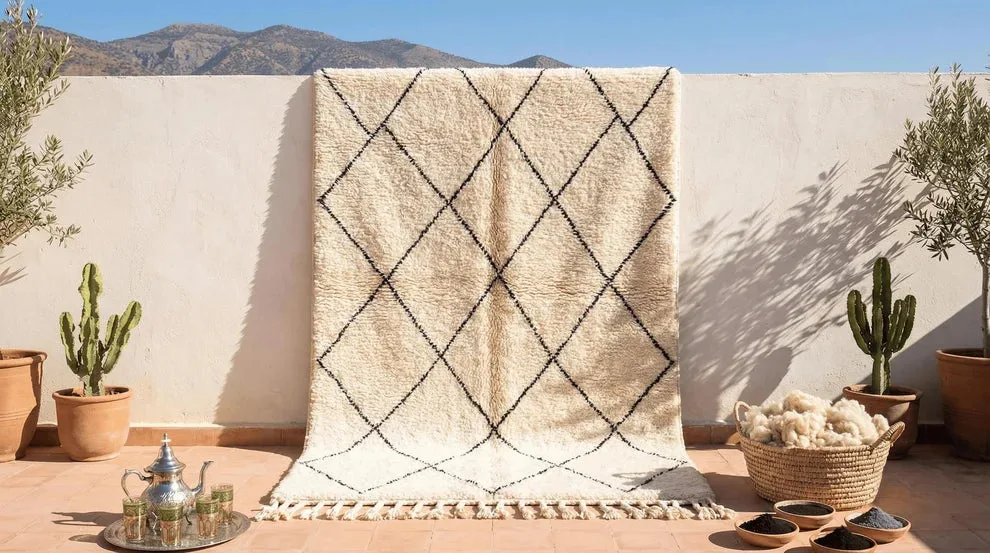
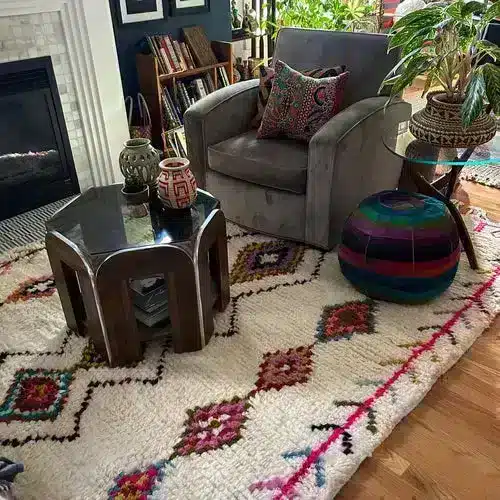
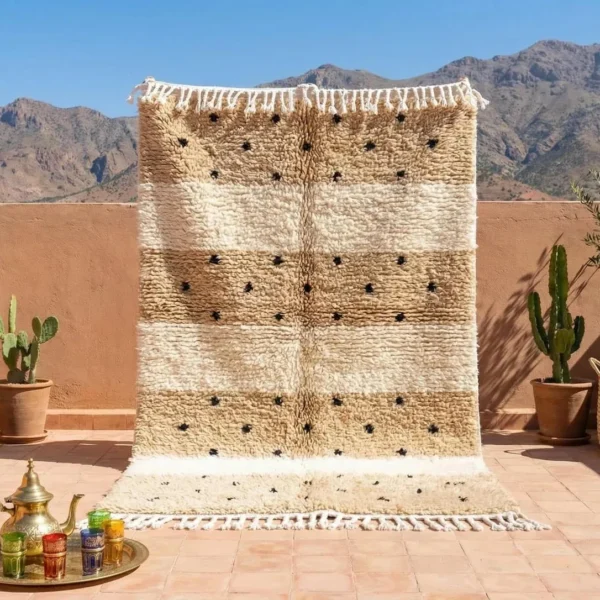
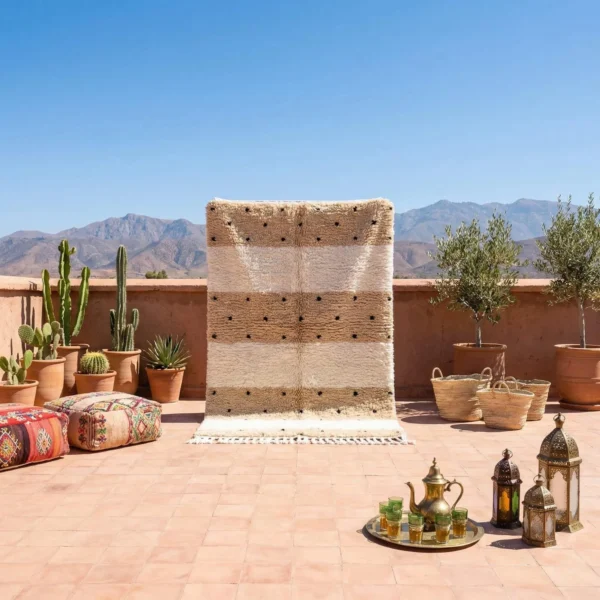
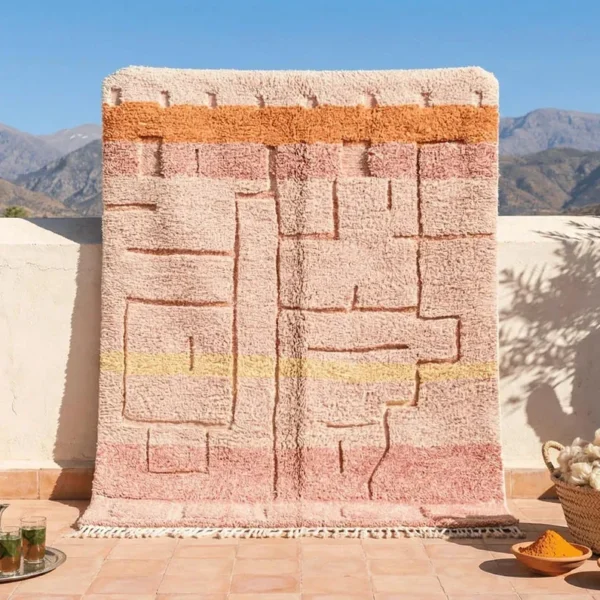
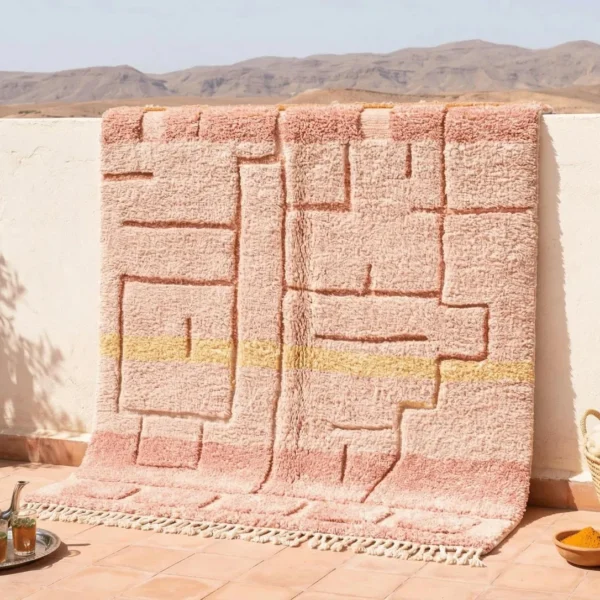
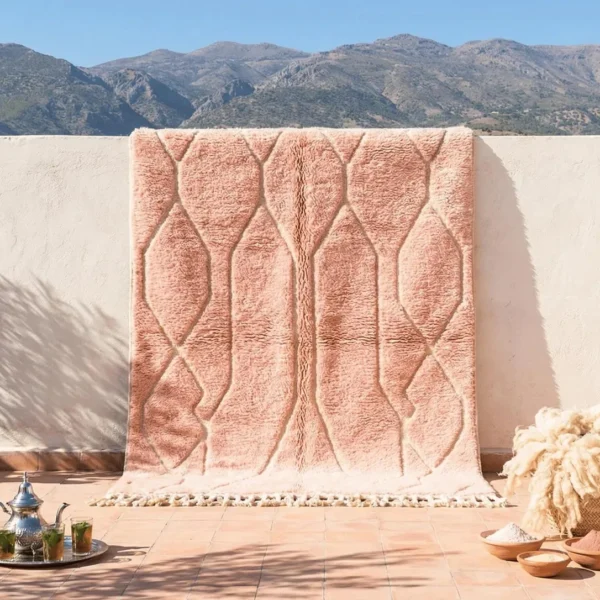
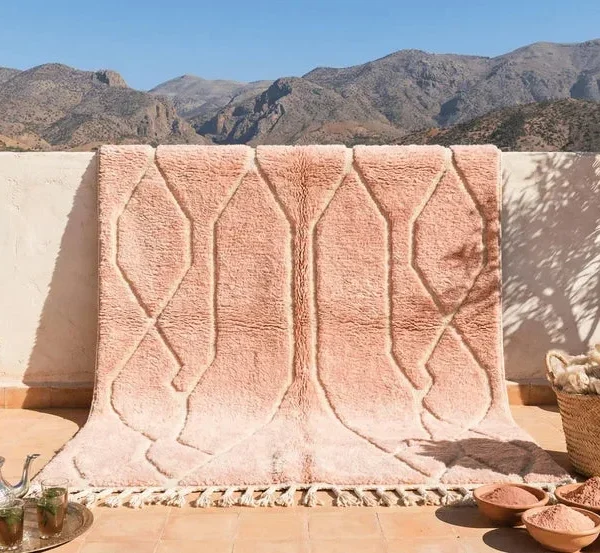
Moroccan rug symbols are a visual language woven by Amazigh (Berber) women. The most common ones are the diamond (protection and femininity), the zigzag (water and the path of life), the eye (protection from the evil eye), the cross or X (balance and protection) and the hand or khamsa (good luck). Meanings vary from tribe to tribe and from weaver to weaver, because the symbols were passed down by hand, not written down.
Our weavers in the Atlas Mountains still use many of these motifs today. Below is a guide to the symbols you will see most often in Beni Ourain, Azilal and Boujaad rugs, and what they are generally understood to mean.
Where Do Moroccan Rug Symbols Come From?
Weaving in rural Morocco was traditionally done by women at home, for their own families: rugs for sleeping, sitting and keeping warm in the mountain winters. Many motifs are shared with Amazigh tattoos, pottery and jewellery, and some echo the ancient Tifinagh script. A weaver might include a symbol for protection when a child was born, for fertility before a wedding, or simply because her mother wove it. That is why two rugs from the same village can tell different stories.
The Most Common Moroccan Rug Symbols and Their Meanings
The Diamond (Lozenge)
The diamond is the signature motif of Moroccan weaving, and the backbone of the classic Beni Ourain rug with its ivory field and dark diamond lattice. It is widely linked to femininity, fertility and protection, and is sometimes read as an eye watching over the home. A diamond with a dot or small shape inside is often associated with pregnancy or new life.
The Zigzag
Zigzag lines usually represent water, rivers or mountains, and more broadly the ups and downs of life’s journey. In a region where water decides everything, it is also read as a wish for abundance. Zigzags are common in striped and banded Moroccan rugs.
The Eye
An eye, often drawn as a diamond or a dotted shape, is a protective symbol meant to deflect the evil eye: envy or bad luck from others. Protective eye motifs appear across North African art, not only in rugs.
The Cross and the X
Crosses and X shapes are generally read as protective, guarding the home from all four directions. Some interpretations see them as a meeting point between heaven and earth or between a man and a woman, so they also appear on rugs woven for weddings.
The Hand (Khamsa)
The hand, or khamsa, from the Arabic word for five, is one of the best-known protective symbols in Morocco. In rugs it is often simplified to a comb-like shape with five lines. It stands for good fortune and protection from harm.
The Chevron
Chevrons, rows of V shapes, are close cousins of the zigzag and are often linked to movement, mountains and strength. They are a favourite in modern Moroccan design because they work well in both neutral and colourful rugs.
Trees, Plants and Barley
Branching tree shapes and barley or wheat motifs stand for life, growth, family and a good harvest. They are more common in colourful rugs such as Azilal rugs, where weavers use more figurative shapes.
The Checkerboard
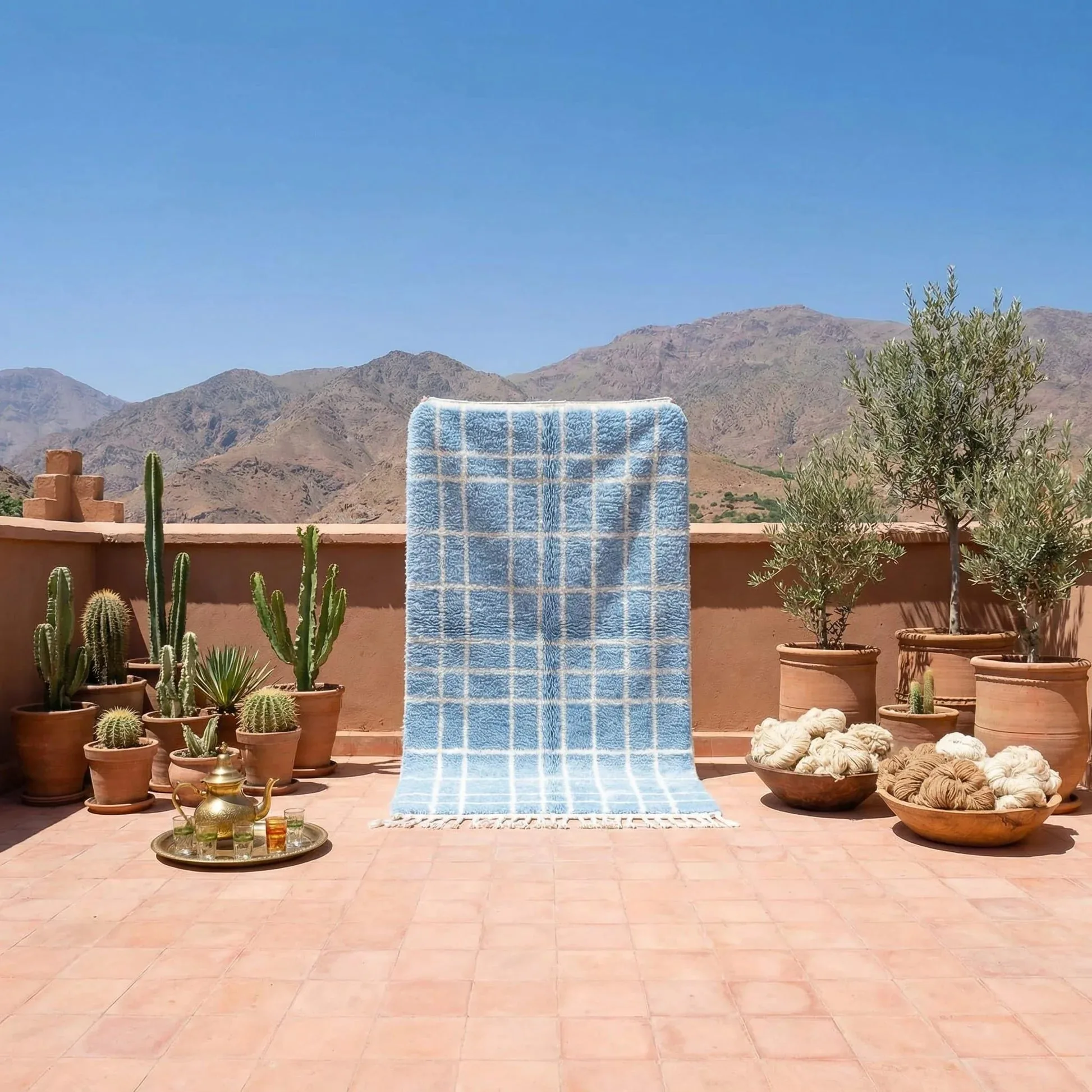
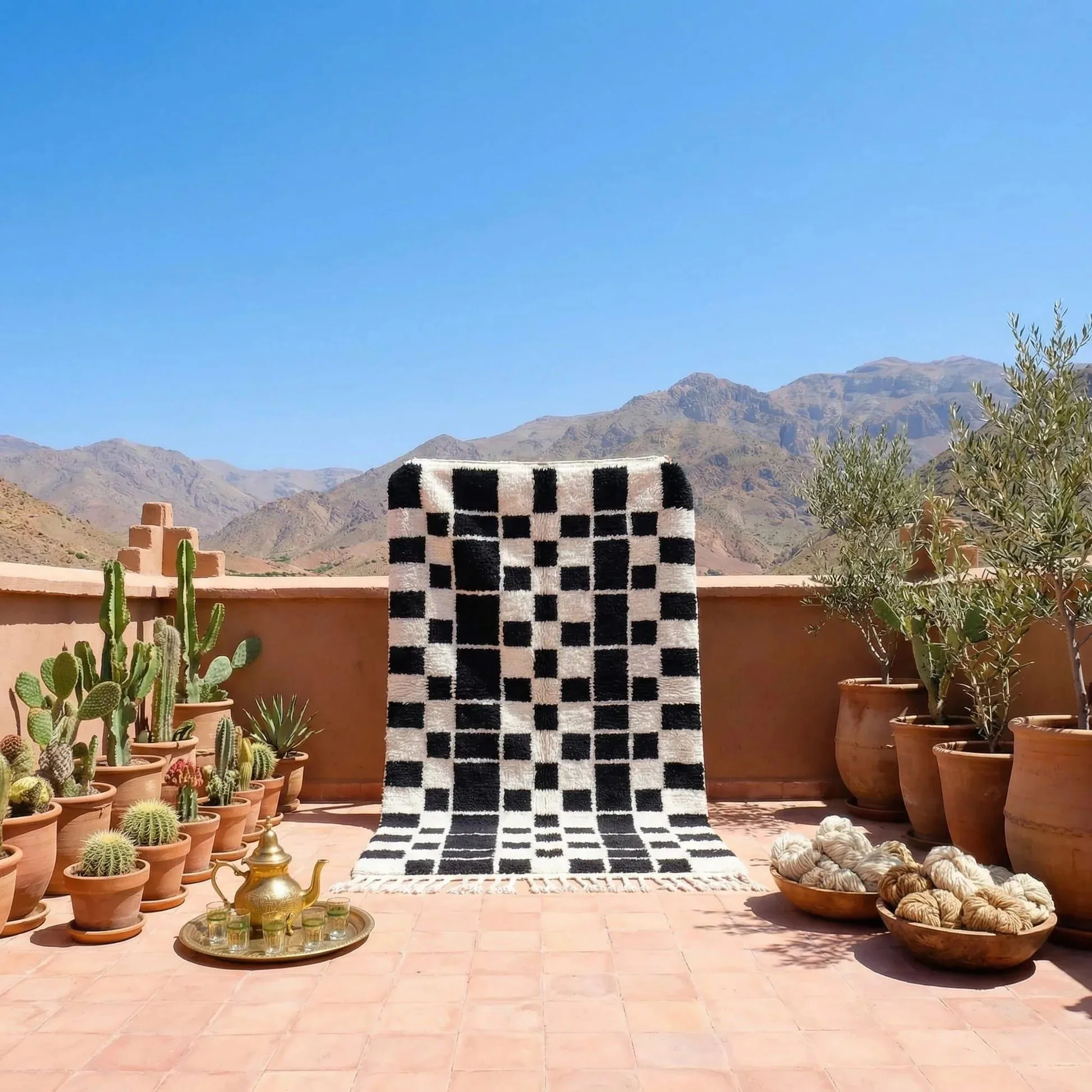
Checkerboard and grid patterns are often read as fields and farmland, or as the structure of the village and family. Today they are one of the most popular modern looks, seen in our checkered Beni Ourain designs.
What Do the Colours Mean?
Colours carry meaning too, though less strictly than shapes. Natural ivory and brown come straight from undyed sheep’s wool and are typical of Beni Ourain rugs. Red is associated with strength, protection and celebration, and is common in Boujaad rugs. Blue is linked to water and sky and sometimes to protection. Green, a colour with strong meaning in Islamic culture, is linked to nature and renewal. Pink, orange and saffron yellow bring warmth and joy. See our colourful Moroccan rugs for examples.
Which Rug Styles Use the Most Symbols?
- Beni Ourain: minimalist, usually diamonds, lattices and lines in black or brown on ivory.
- Azilal: the richest in symbols, with colourful, often asymmetric motifs on a cream base.
- Boujaad: warm reds and pinks with loose, abstract diamonds and shapes.
- Flatweaves (kilims): bands of zigzags, diamonds and small repeated motifs.
Our guide to Moroccan rug styles explains each type in more detail.
Can I Choose the Symbols on My Rug?
Yes. Because every rug in our shop is woven to order by the women of our cooperative, you can ask for a design with particular motifs, colours or a custom size. Tell us what you would like and we will pass it to the weaver.
Frequently Asked Questions
What do the symbols on Moroccan rugs mean?
They usually relate to protection, fertility, family, nature and daily life. The diamond, zigzag, eye, cross and hand are the most common. Exact meanings vary by tribe and weaver.
Do all Moroccan rugs have symbols?
No. Some rugs are plain or use simple stripes and grids. Even minimalist Beni Ourain rugs often contain diamonds, though, and many weavers add small personal marks.
What is the most common symbol in Berber rugs?
The diamond, or lozenge. It appears in almost every style of Berber rug and is usually linked to femininity, fertility and protection.
Are the symbols on machine-made rugs meaningful?
Machine-made “Moroccan style” rugs copy the shapes, but they are not woven by Amazigh weavers and carry no personal meaning. Learn how to tell the difference in how to spot an authentic Moroccan rug.