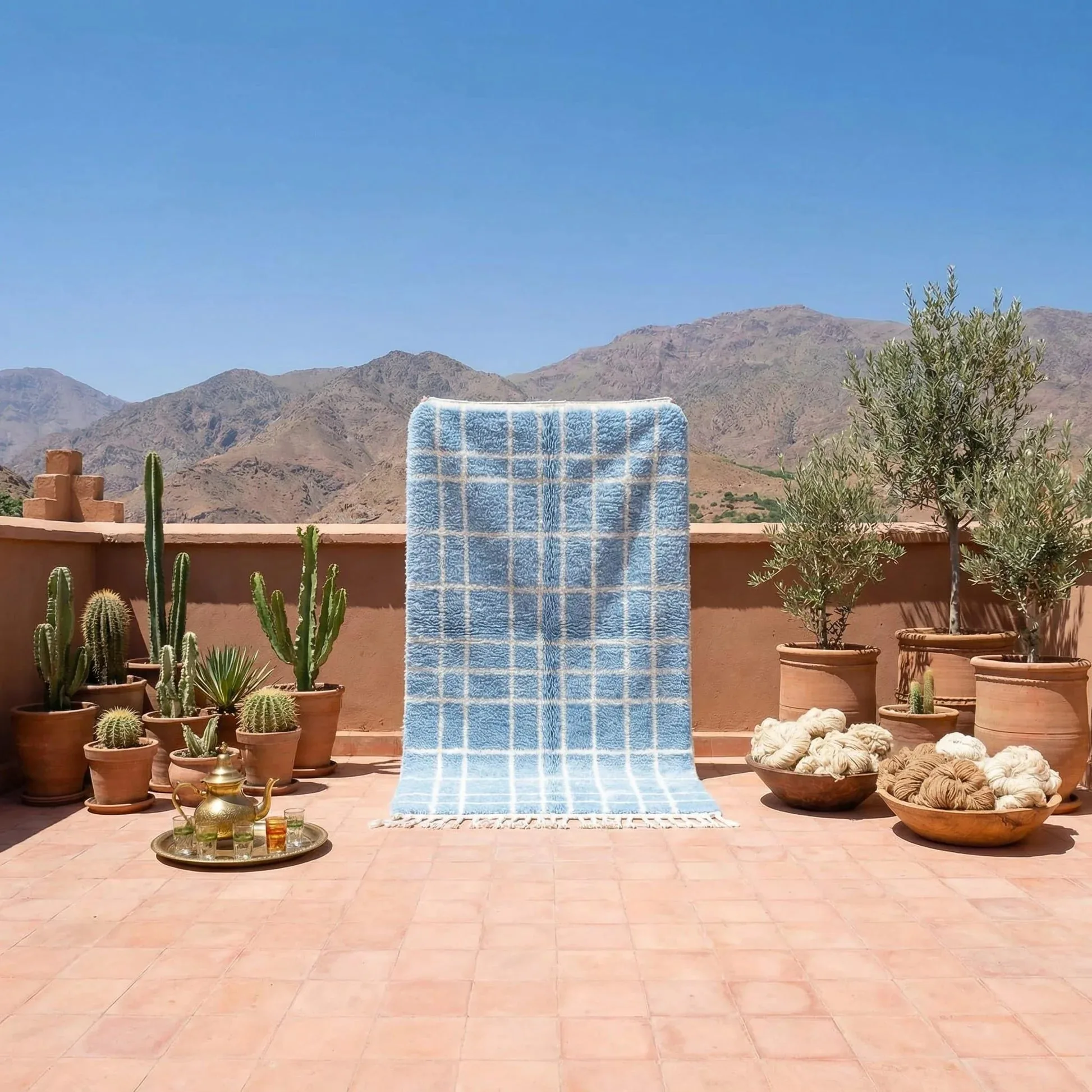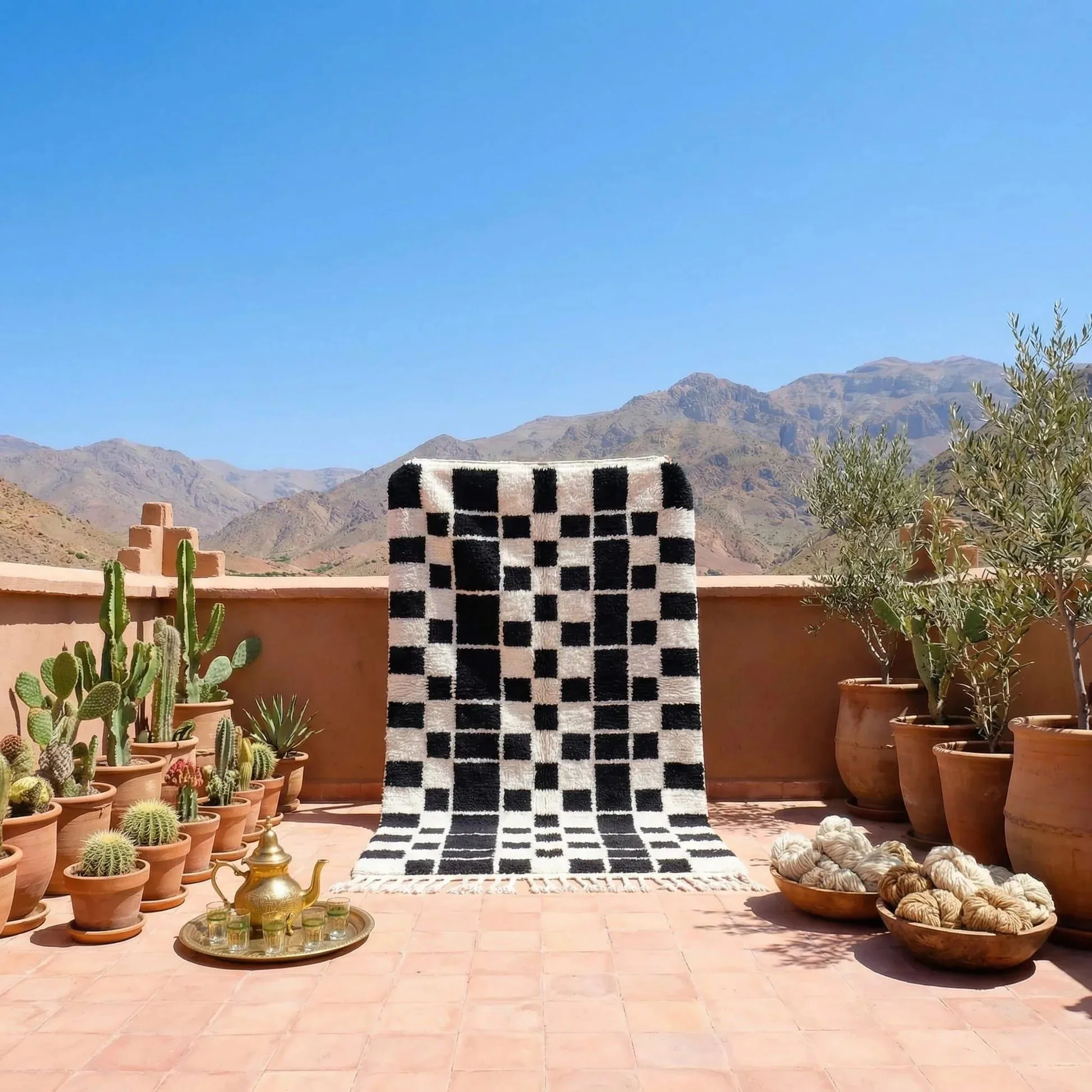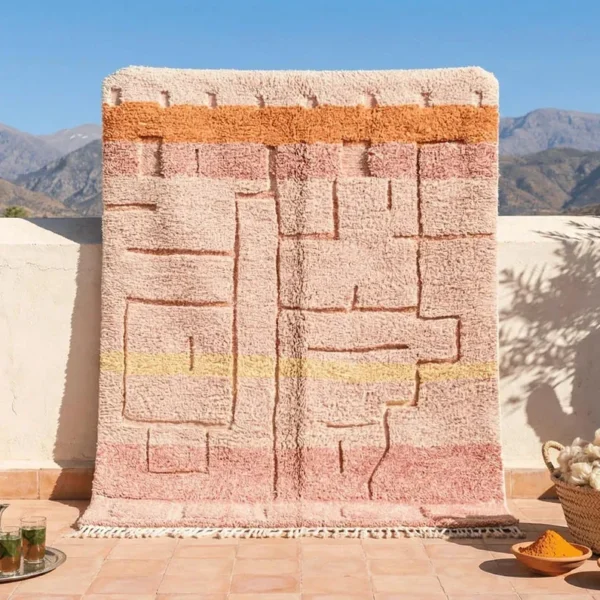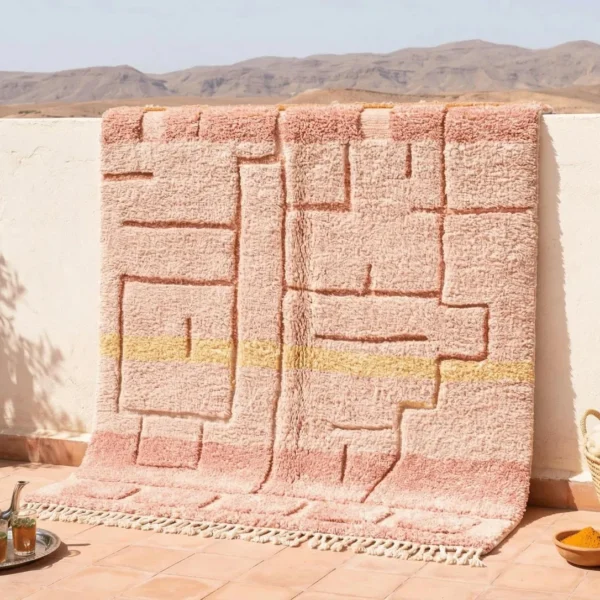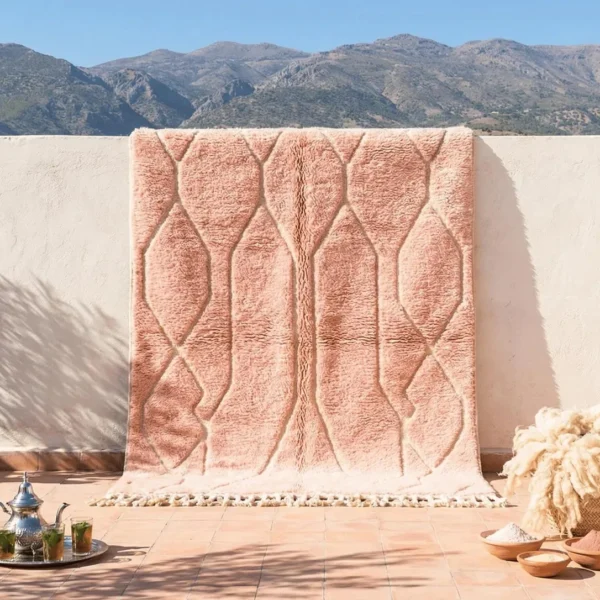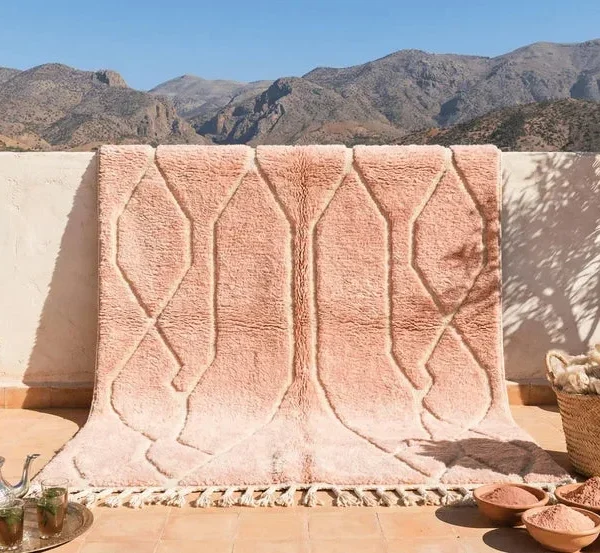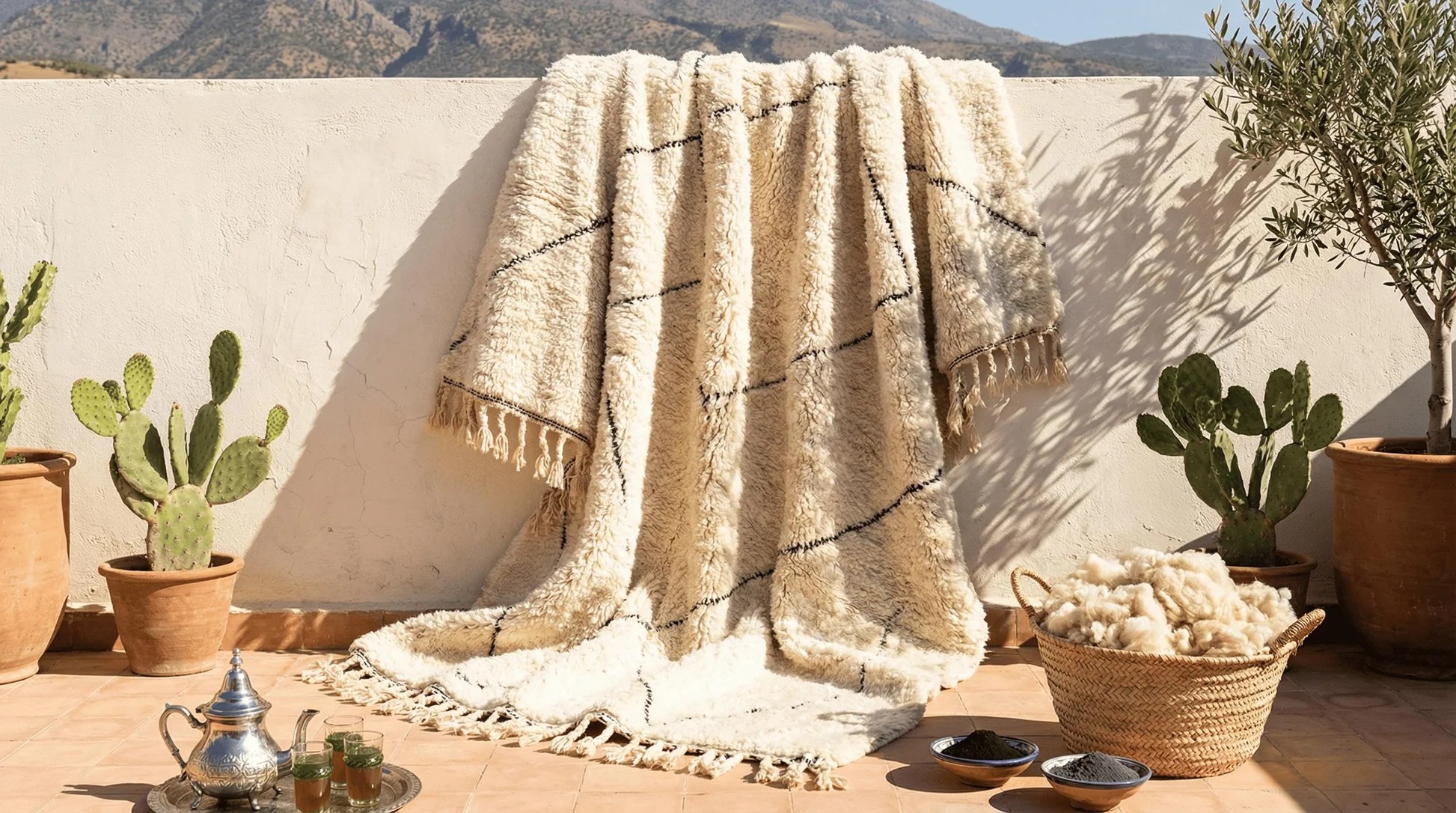
Why are Moroccan rugs so expensive? A real Moroccan rug is hand-knotted from natural wool, one knot at a time, and a single rug takes a weaver weeks to finish. On top of that labour, most rugs pass through several dealers, an importer and a showroom before they reach you, and each one adds a markup. The rug itself is not overpriced; the chain around it often is. Buy directly from the weavers and the same hand-knotted rug costs a fraction of the showroom price.
We are a family weaving cooperative in the Atlas Mountains, so we see both sides of the price every day. Here is what you actually pay for when you buy a Moroccan rug, why some cost $150 and others $5,000, and how to get a genuine one without paying for middlemen.
1. Every Knot Is Tied by Hand
A hand-knotted Moroccan rug is made on a vertical loom. The weaver ties a short piece of wool around the warp threads, cuts it, and repeats, row after row, then beats each row down with a heavy comb. An 8×10 rug contains tens of thousands of knots. Depending on the size and the pattern, a rug takes 2–4 weeks of full-time work for our weavers, and large or detailed pieces take longer.
Compare that with a machine-made “Moroccan style” rug, which a power loom or tufting gun produces in minutes. When you see a $120 8×10 rug sold as Moroccan, that is what you are looking at. Read our guide on how to spot an authentic Moroccan rug to tell the two apart.
2. Natural Wool Costs More Than Synthetic Fibre
Authentic Moroccan rugs are made from sheep’s wool, which is washed, carded and spun before weaving starts. Good wool is springy, warm, naturally stain-resistant and lasts for decades. Polyester and acrylic copies are far cheaper to make, but they flatten, pill and trap odours. That difference in raw material is one of the biggest gaps between a real rug and a copy, and it is also why a real wool rug ages well instead of wearing out.
3. Size Multiplies the Work
Because every square foot is knotted by hand, price rises with area. A 9×12 rug has more than twice the surface of a 5×7, so it takes more than twice the wool and more than twice the weaving time. That is why our handmade rugs start at around $262 for a 5×7, $370 for a 6×9, $535 for an 8×10 and $789 for a 9×12, with free worldwide shipping. See our Beni Ourain rug price guide for a full breakdown by size.
4. Middlemen Add Most of the Markup
This is the part most buyers never see. A typical Moroccan rug sold in a Western store has passed through:
- A local collector who buys from the weaver in the village,
- A bazaar or wholesale dealer in Marrakech or Fes,
- An exporter and an importer,
- A retailer or designer showroom.
Each step adds its own margin, plus shipping, storage and showroom costs. The weaver, who did nearly all the work, usually receives the smallest share. That is why the same style of rug can cost a few hundred dollars from the weavers and several thousand in a high-end store.
5. Vintage and Rare Rugs Carry a Collector Premium
Some of the most expensive Moroccan rugs are vintage pieces, woven decades ago and sold through antique dealers. Their price reflects age, rarity and collector demand, not just materials and labour. If you love the look but not the price, a new rug woven in a traditional design gives you the same craftsmanship with fresh, strong wool. Our vintage Moroccan rugs guide explains the difference.
Why Are Some Moroccan Rugs So Cheap?
If a “Moroccan rug” is very cheap, one of these is usually true:
- It is machine-made, often in polypropylene, and only printed or woven in a Moroccan-style pattern.
- It is hand-tufted, not hand-knotted. Tufted rugs are glued to a backing, which can loosen and smell over time.
- It uses low-grade or blended fibre that sheds heavily and flattens quickly.
- It is very small, so the listed price looks low next to a full-size rug.
We cover these risks in detail in the hidden dangers of Moroccan rugs.
Are Moroccan Rugs Worth the Price?
For most people, yes, as long as you are paying for the rug and not for the chain of dealers. A hand-knotted wool rug is good quality in the ways that matter: it is soft underfoot, it insulates a cold floor, it hides everyday dirt, and with simple care it lasts for decades. Spread over its lifetime, a real Moroccan rug often costs less per year than replacing a cheap synthetic rug every few years.
How to Buy a Real Moroccan Rug Without Overpaying
- Buy as close to the weaver as possible. A cooperative or a weaver-owned shop removes most of the markup.
- Check the back. A hand-knotted rug shows the same pattern on the back, with visible rows of knots and no glued backing.
- Ask what it is made of. You want 100% wool pile.
- Order the size you need. Made-to-order rugs fit your room exactly, so you don’t pay for a size that doesn’t work.
- Compare prices per size, not per rug: a “cheap” rug is often just a small one.
Every rug in our shop is hand-knotted from natural wool by the women of our cooperative, woven to order in any size, and shipped straight from Morocco. Popular choices are our Beni Ourain rugs and 8×10 Moroccan rugs.
Frequently Asked Questions
How much should a Moroccan rug cost?
Bought directly from the weavers, a new hand-knotted wool Moroccan rug starts at around $262 for a 5×7 and $535 for an 8×10 in our shop. Showroom and designer prices for similar rugs can be much higher, and vintage collector pieces can cost thousands.
Are Moroccan rugs cheaper in Morocco?
Sometimes, but not always. Tourist souks often start at high prices and expect bargaining, and you then pay to ship the rug home. Read how much rugs cost in Morocco before you go.
Are Moroccan rugs good quality?
Authentic hand-knotted Moroccan rugs made from good wool are very durable and can last for generations. Quality problems almost always come from machine-made copies, synthetic fibres or rushed production.
Why are Berber rugs so expensive?
“Berber rug” and “Moroccan rug” usually mean the same thing: rugs woven by Amazigh (Berber) women in Morocco. They cost more than machine-made rugs for the same reasons: hand knotting, natural wool, weeks of work and dealer markups. Learn more in what is a Berber rug.