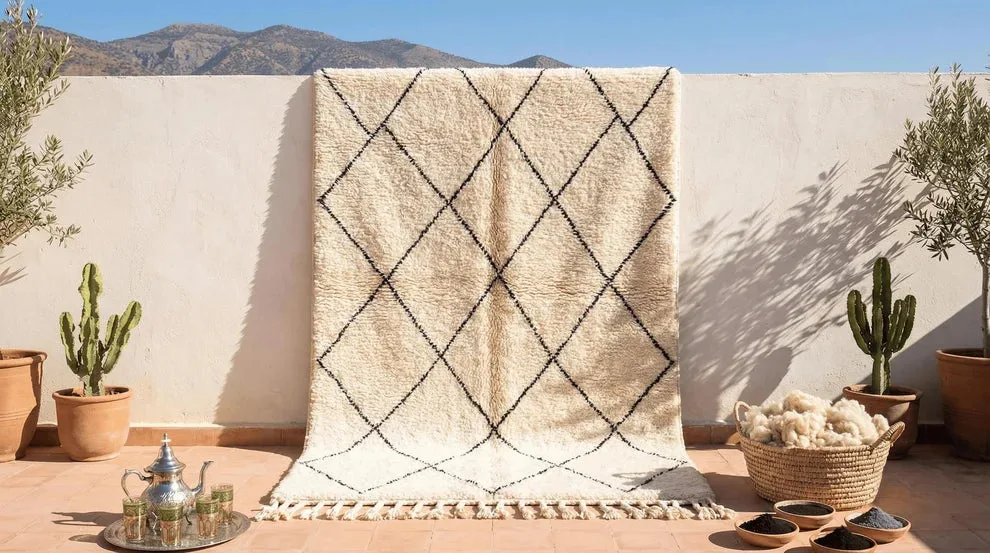
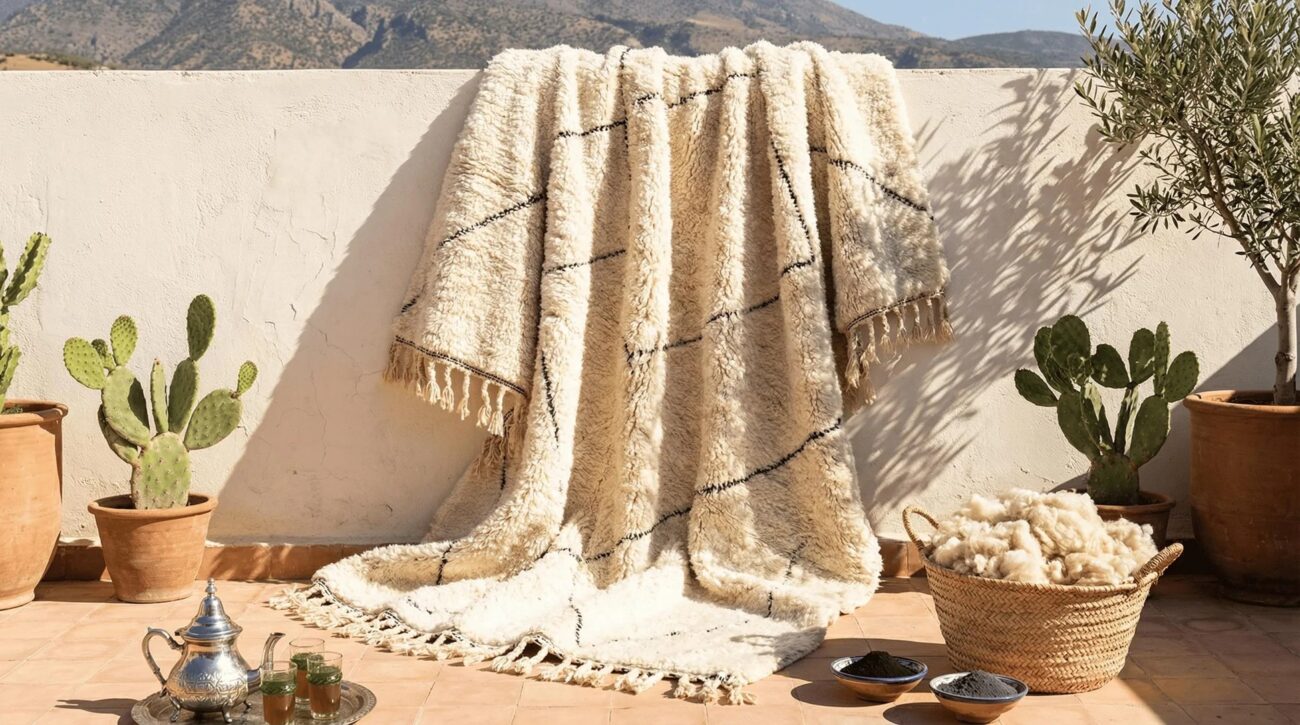
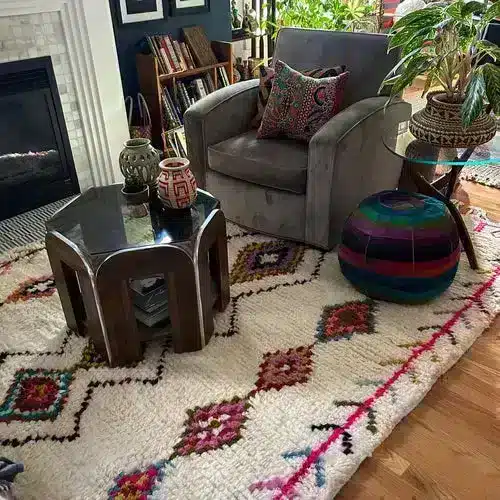
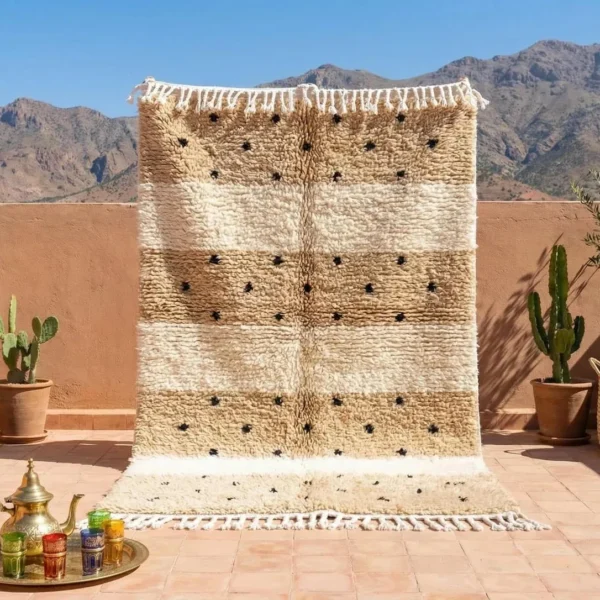
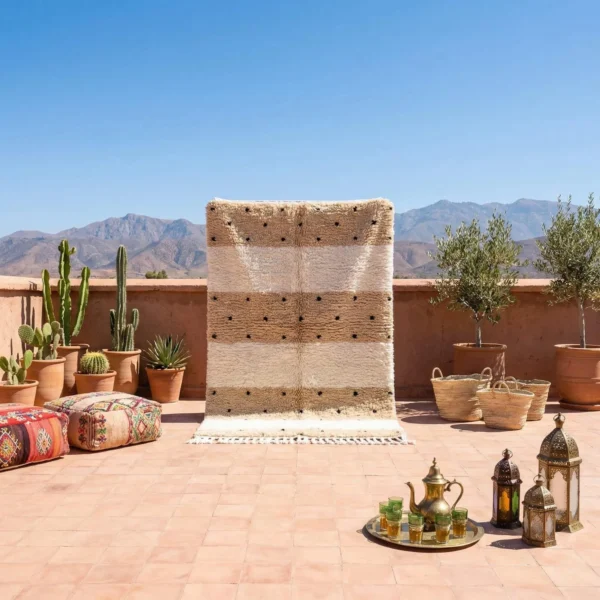
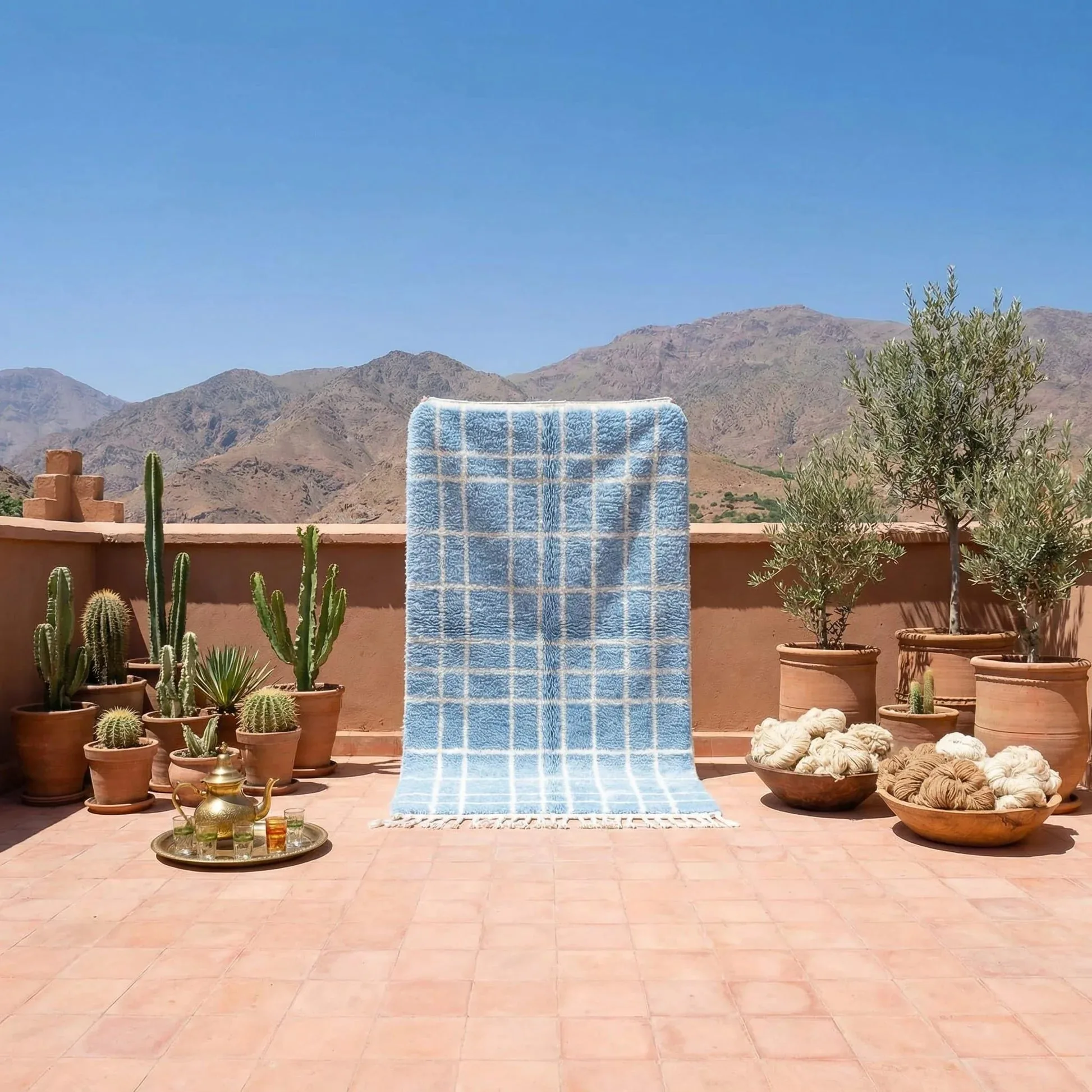
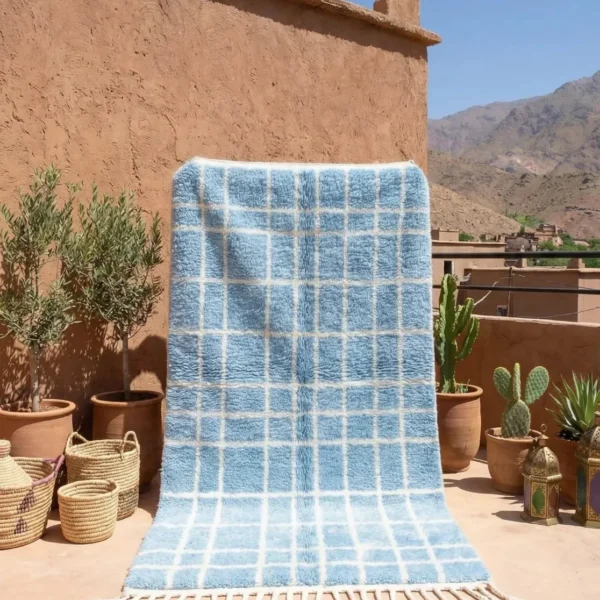
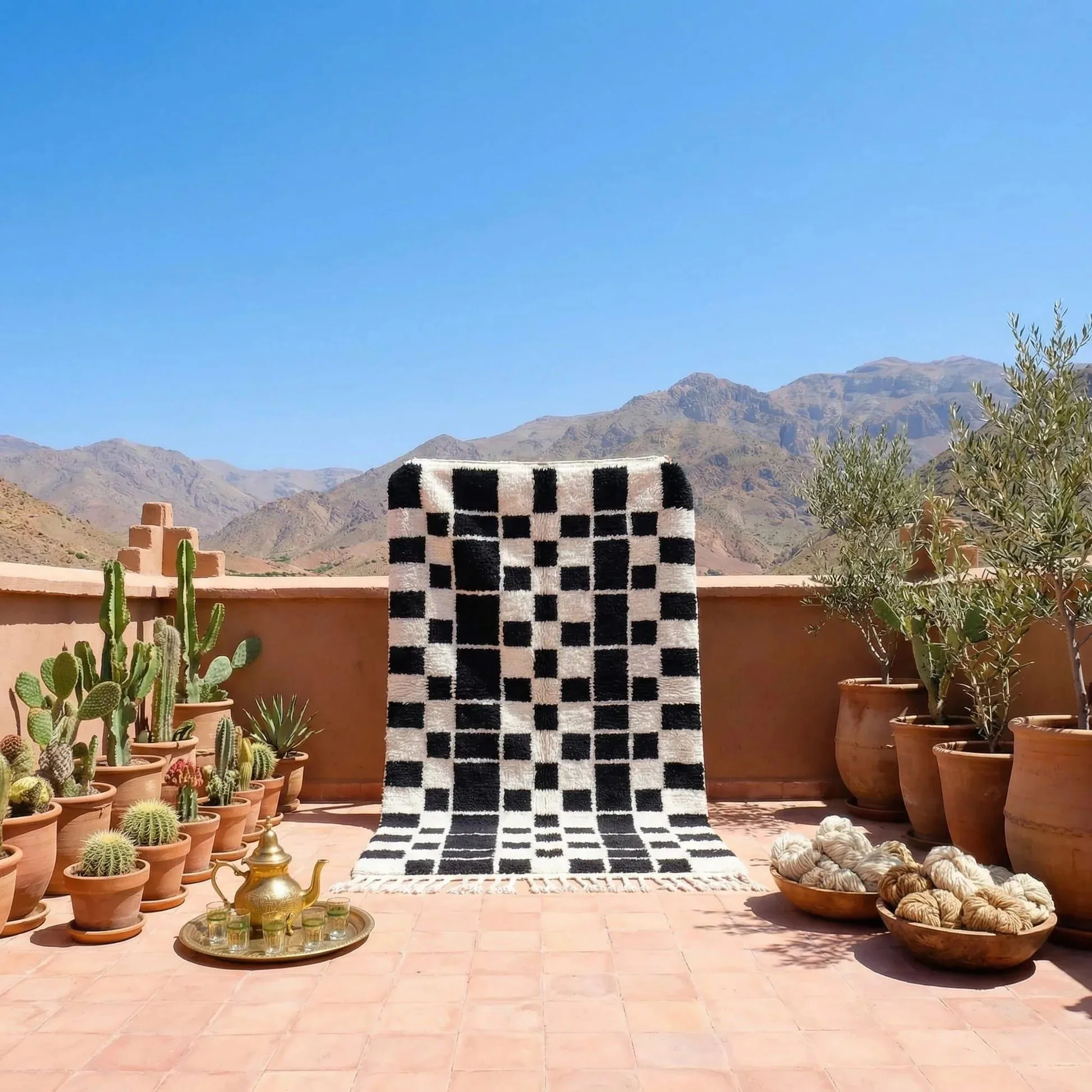
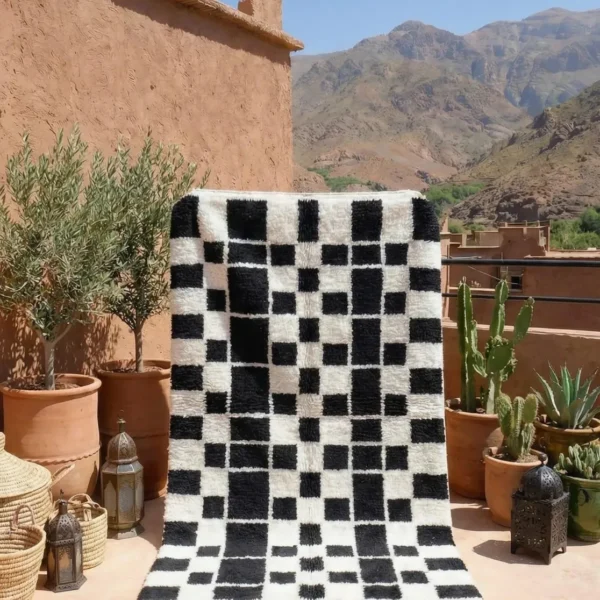
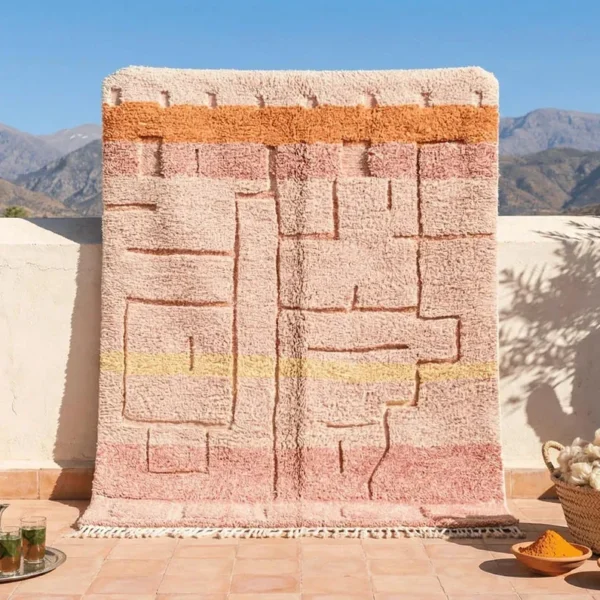
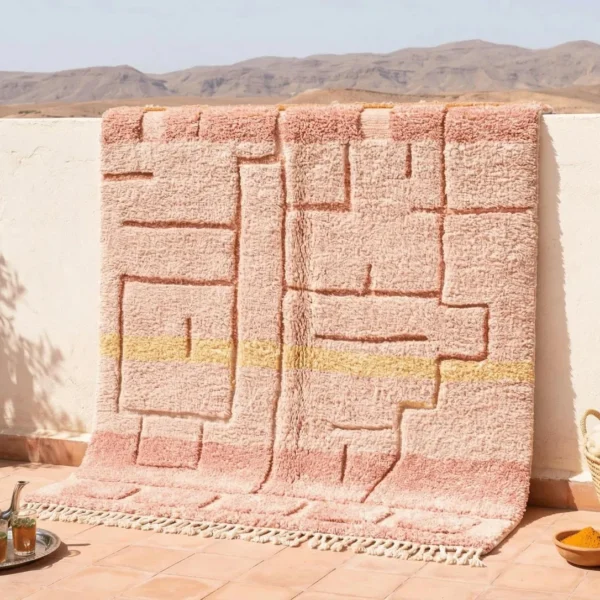
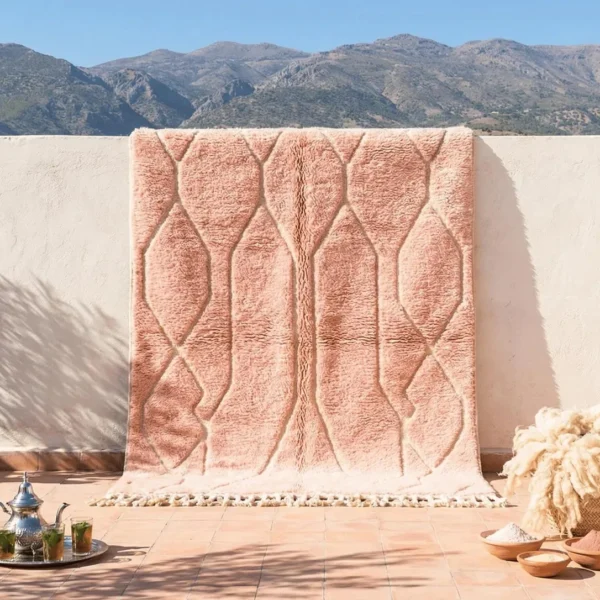
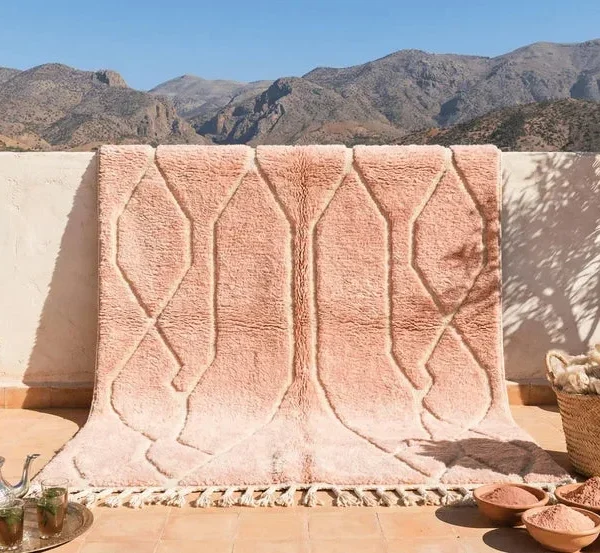
Moroccan rugs are beautiful, but buying one is not always simple. Behind the photos there are some hidden dangers of Moroccan rugs that most shoppers only find out about after the rug arrives: fake “Moroccan” rugs made from plastic fibres, harsh chemical dyes, heavy shedding, slipping on hard floors, and moths. The good news is that every one of these problems is easy to avoid once you know what to look for. As weavers who sell our own rugs, here is our honest guide.

1. Fake Moroccan Rugs Made From Synthetic Fibres
The first of the hidden dangers of Moroccan rugs, and the biggest, is buying a rug that is not Moroccan at all. Many cheap “Moroccan style” rugs are machine-made from polypropylene or polyester. They copy the look of a Beni Ourain rug but feel stiff, flatten quickly, attract static and dust, and cannot be repaired. Synthetic rugs can also give off a chemical smell when new.
How to avoid it: check that the listing says 100% wool and hand-knotted, look at the back of the rug for individual knots, and be careful with prices that seem too good to be true. Our guide to spotting an authentic Moroccan rug shows exactly what to check.
2. Harsh Chemical Dyes and Strong Odours
Chemical dyes are one of the less obvious hidden dangers of Moroccan rugs. Some low-cost rugs are dyed with cheap chemical dyes and then “antiqued” with bleach to make them look vintage. This can weaken the wool, cause colours to run when the rug gets wet, and leave a strong smell. A real wool rug may smell a little of sheep when it is new, which is natural and fades within days, but a sharp chemical smell is a warning sign.
How to avoid it: ask the seller how the rug was dyed and washed. Undyed natural wool, like the ivory of a classic Beni Ourain, is the safest choice of all.
3. Heavy Shedding
Shedding is often listed among the hidden dangers of Moroccan rugs, but all new wool rugs shed a little as loose fibres from the weaving work their way out. That is normal and stops after a few weeks of vacuuming. Heavy, never-ending shedding, however, usually means short, low-quality wool or a rug that was not washed properly after weaving.
How to avoid it: choose rugs made from long-staple Atlas Mountain wool, and vacuum gently without the beater bar for the first month.
4. Slipping and Tripping on Hard Floors
A thick, soft Moroccan rug on a wooden or tiled floor can slide, and a curled corner can be a trip hazard, especially with children, pets or older family members at home.
How to avoid it: always use a good felt-and-rubber rug pad. It stops slipping, protects the floor and makes the rug feel even softer. If a corner curls, roll it the other way for a day.
5. Moths and Carpet Beetles
Wool is a natural fibre, so moths and carpet beetles can damage it if a rug is left in a dark, undisturbed place for a long time, such as under a sofa or rolled up in storage.
How to avoid it: vacuum regularly (including under furniture), let sunlight and air reach the rug, and store rugs clean, rolled and wrapped in breathable cotton, never plastic. Our Moroccan rug care guide has a full routine.
6. Mould and Damp
Wool can hold water. A rug that is washed and not dried properly, or placed on a damp floor, can develop mould and a musty smell.
How to avoid it: blot spills quickly, never soak the rug at home, and use a professional rug cleaner every one to two years.
7. Paying Too Much to Middlemen
The last of the hidden dangers of Moroccan rugs is to your wallet. A Moroccan rug often passes through several dealers before it reaches a shop, and each one adds to the price, while the weaver receives very little.
How to avoid it: buy from a seller who works directly with the weavers. You pay a fairer price and more of your money goes to the women who made the rug. See our guide to what a Beni Ourain rug should cost.
Are Moroccan Rugs Safe? The Hidden Dangers of Moroccan Rugs in Perspective
Yes. A genuine hand-knotted Moroccan rug made from natural wool is one of the safest, longest-lasting rugs you can buy. Wool is naturally flame-resistant, does not give off chemicals, and helps regulate humidity in a room. Almost all of the hidden dangers of Moroccan rugs come from cheap copies or from simple care mistakes.
Frequently Asked Questions
Do Moroccan rugs smell?
A new wool rug can have a light, natural wool smell for a few days. Air it out in a well-ventilated room and it will fade. A strong chemical smell suggests synthetic dyes or fibres.
Are Moroccan rugs safe for babies and pets?
Real wool rugs are a good choice for families. Use a rug pad, vacuum often and choose a medium pile that is easy to clean.
How can I be sure I am buying a real Moroccan rug?
Buy 100% wool, hand-knotted rugs from a seller who can tell you who wove them. Every rug in our shop is hand-knotted by Amazigh women in the Atlas Mountains and shipped free worldwide.
The simplest way to avoid every one of these dangers is to buy a hand-knotted wool rug directly from the weavers. Browse our authentic Beni Ourain rugs and Azilal rugs, or shop by size: 5×7, 8×10 Moroccan rugs and 9×12 Moroccan rugs.